Skip to content Skip to sidebar Skip to footer

Blog

The machines are coming!

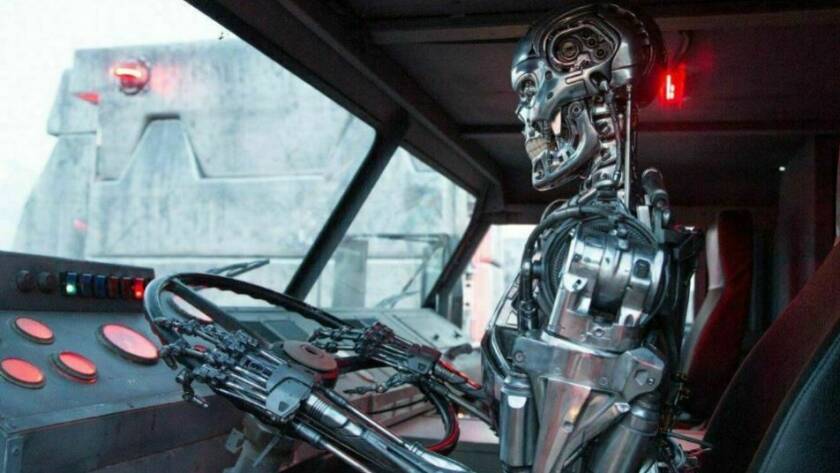
Automation in mining has been very slow to catch on. The reason is that much of the present batch of automated machines follow a sequence rather than think for themselves. When a sensor detects something out of line, safety protocols intervene and the sequence stops, undermining their cost effectiveness. Mining is a very dynamic environment and little things like rocks on the road present a complex challenge for a pre-programmed machine.

Read More

What drives innovation?

Since the federal government has been bombarding us with political messages about innovation, I started to reflecting on what really drives innovation. I can't speak for other industries but I would like to tell you my story. Everyone knows that the mining industry is tough right now. Back in 2012, MEC (my consulting company) collectively decided that we needed to be innovative to remain competitive as the mining boom slowed down.

Read More

From the Director’s chair

I'm writing to you today from my new desk in our open plan office. It's quite a cosy layout, with everyone effectively sitting on one great big long centre desk. Prior to our move I had an enclosed office, which at the time I thought was great because nobody hear confidential phone calls or see my screen when. Well now I'm fully converted to open plan. It can get a little noisy as we don't have any policies about silence and making phone calls in quiet rooms, and in fact, a little banter is encouraged. The brilliant part is that now everyone knows what is going on with everyone else's work. Collaboration has really lifted and the time we spend in meetings has declined because you can just yell out. Everything seems to happen faster in this environment.

Read More

Why grads don’t operate equipment anymore

I started my career 18 years ago on a salary of $50,000 which was good money at the time. Mining was in a downturn and there weren't too many jobs around. I sent 85 job applications and got one interview which thankfully went well and I got the job. Throughout the early part of my career a truck operator would get paid around $85,000 and most grads aspired to operating equipment for 6 months, motivated in large part by the extra money. Senior engineers in the 90's were also actually mostly senior, many had aged enough to go a little grey or bald so it was understood that career aspirations would most likely take a while to play out.

Read More

The cost of high mining intensity

During the mining boom years, the focus was on producing as much as possible from the resource to take advantage of higher prices. OEMs did very well selling the addition machinery required to achieve the extra production. So now that commodity prices are low and capacity is already installed, the main game of late has been to drive economies of scale by pushing production even higher. This approach carries a penalty that might not immediately be obvious.

Read More

Focus on the trucks to decrease costs

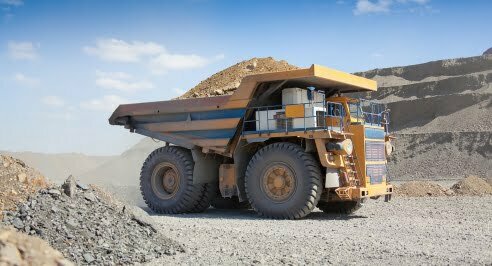
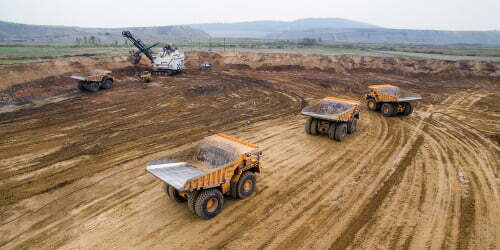
In a truck shovel operation, all we ever talk about is the excavator. We schedule the excavator, measure it's productivity, compare various models and make judgements about which ones perform best. But In fact, the excavator doesn't put any material in the dump or stockpile, its the trucks that do all the work and incur most of the cost of moving the material. So we should really be looking at which is the best truck to use. Assuming that the truck and excavator size are appropriately matched (between 3 and 5 bucket passes to fill a truck), the performance of the excavator only comes into the equation during loading which is perhaps 2 minutes out of a total truck cycle time of 20 minutes. So if the excavator hits some hard dig and takes 3 minutes to load a truck, the excavator productivity will fall by 50% but the truck productivity will only fall by 5% which hardly affects the unit cost of the operation.

Read More

Reduce Coal Loss to Improve Profitability

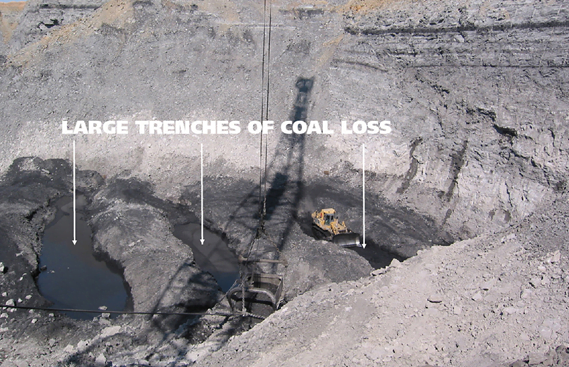
What is the biggest factor that you could control at an open cut coal mine to generate return? For me it would be loss and dilution. Small improvements deliver big increases in cash generation, usually at minimal or no additional cost. Commonly, most of the coal losses occur at top of coal as blast energy breaks up the coal and makes it difficult to separate cleanly from the waste. Big gains can be made by improving blasting practices to avoid fracturing the coal.

Read More

Beating Meetings in the Office

Most of us in mining will agree that we have too many meetings, using up too much of our time, but it's really hard to do much about it. I would spend around half of my time in a meeting including some days that are wall to wall meetings. I often reflect that if had an extra hour each day to get the real work done, then that would make a material difference to my effectiveness. Now, I think that a lot of our time in meetings is wasted and we often subconsciously find ways to fill the meeting agenda to use the whole time slot.

Read More

Handling Fatigue in the Workplace

One of my favourite sayings is that engineers are like diamonds, formed under pressure and worth a lot. Unfortunately, lately we now seem to be worth a little less money than we are perhaps used to. None the less, the pressure and workload in mining stands above many other industries.

Read More

Who Understands The Gold Price?

If you are being objective, you can't really explain the price of gold by looking at its uses. Sure it looks good in jewellery but most of the gold doesn't end up in jewellery, it sits in locked vaults gathering dust. There is now enough stored gold above ground to keep the jewellery market supplied for hundreds of years without needing to mine any more. So logically the price should crash and nobody should bother mining it any more. In fact people predict this all the time but it never happens.

Read More

Coal Controversy Discussion

I'll level with you, coal is pretty dirty stuff. I'm in the coal game (open pit / underground) but I'll give you that one. It doesn't do the atmosphere or the landscape much good. However had humans never used coal, then steel and power could not have been made, the industrial revolution would not have happened and we would still be living subsistence lives with short life expectancy.

Read More

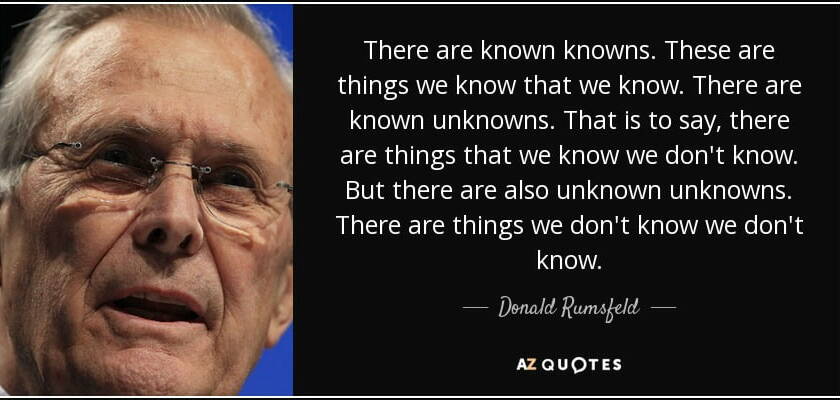
Known Unknowns and Unknown Unknowns

I took out my wheely bins this morning and since we have been on holidays I couldn't remember if it was recycling week or green bin week.  I looked up the street and saw that most people had put out their recycling bin so I did the same. It turns out that nobody knew that it was green bin week.  Everyone had copied the first person to put their bins out, who had in turn just made a guess, leading to a whole street full of smelly bins.

Read More